
Insights & analysis
Wondering what a mobile app really costs? Learn what drives the price, how to plan your budget, and what to ask mobile app developers in Dallas.
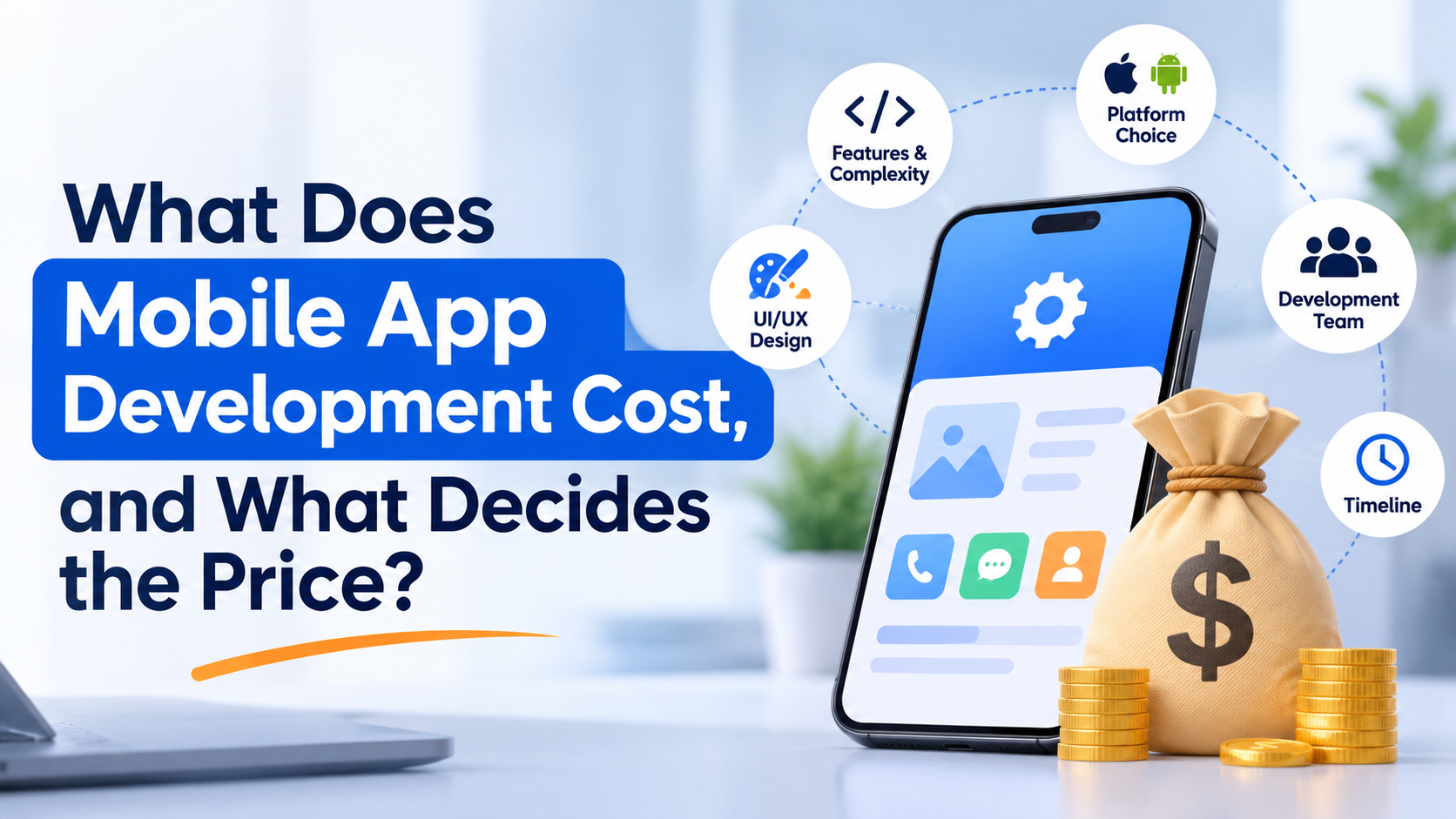
The honest answer: it depends on what your app does, how it looks, and who builds it. Features, design, platforms, and the team behind it drive nearly every dollar. This guide breaks down each piece in plain language so you can plan a budget that holds up.
As with houses, there is a huge difference between different apps. Just as a studio flat and a lake house will have very different costs, the cost of apps can vary greatly depending on what they include.
Having a basic app (for example just displaying information and a contact option) will be very different to having logins, payments, real time maps and chat functions. Most mobile app development companies in Dallas will want to understand your requirements further before stating a price for you. This is a good sign.
There are 5 main factors which affect the cost of developing your mobile app. These are: Features, Design, Platforms, Team, and Ongoing maintenance.
These will have a big impact on pricing. Adding features to your app can add significant cost. Even adding login functionality can mean many additional features, such as password reset, secure login and account management. Adding payment methods, notifications, chat and mapping features all increase complexity.
Make a list of all the features you would like to include in your app. Split them into ‘essential’ and ‘to add in future’. You may be surprised by how short your essential list is!
Yes! Not only does having a good design make your app look great, it makes it feel great to use. Having a typical design will reduce development time. Whereas including custom animations, illustrations and unique screens increases development time and therefore cost.
However, be careful not to compromise this. People are quick to uninstall apps which are confusing.
Usually it is desired to have apps for iPhone and Android. However, it may be better to start with just one platform, as this will be cheaper. Many teams now use tools meaning that most of the work can be used in both the iPhone and android versions. This means that you can reduce cost without affecting quality.
If you know that the majority of your customers will be using one particular platform, it may be best to start with this.
Yes, vastly. Whether you are working with a freelance developer, small studio or large agency, the price will differ. In Dallas, working with local mobile app developers may be expensive compared to cheaper options from far away. However, it may be easier to meet with them, questions can be answered quickly, and they will have a better understanding of your market.
Don’t be tempted by the cheapest option. Rushed development can cause greater costs in the longer term.
Yes! Ongoing costs can easily be forgotten. As phones update, bugs occur and users request changes. Hosting, App Store fees, and third party services (depending on what your app uses) will all incur costs.
It is commonly advised to allocate a percentage of the initial development costs per year to ongoing costs. Get your team to advise what amount you should allow.
Start small, spend deliberately, and leave breathing room. Here's a simple path that works for most people.
Ask to see examples of apps they have created, and who you will be liaising with. This can give you a good indication of what to expect.
Other useful questions might be:
If the answers are unclear, ask for more information. Reputable mobile app development services in Dallas will be very happy to provide details on how they operate.
Changing your requirements part way through, not planning properly or picking a team based purely on price will often lead to costs increasing. Trying to include far too many features in your initial release can also be problematic.
Start with a simple version, and allow real users to try it. Next time you spend money on your app, consider spending it on features that users actually ask for.
Worth Reading: Why Businesses Prefer a Local Mobile App Development Company in Dallas